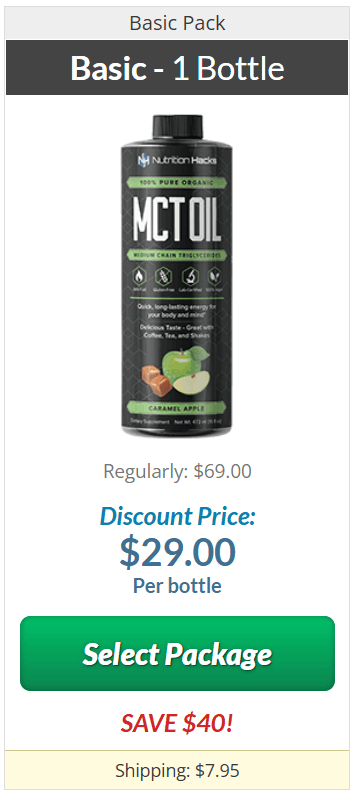
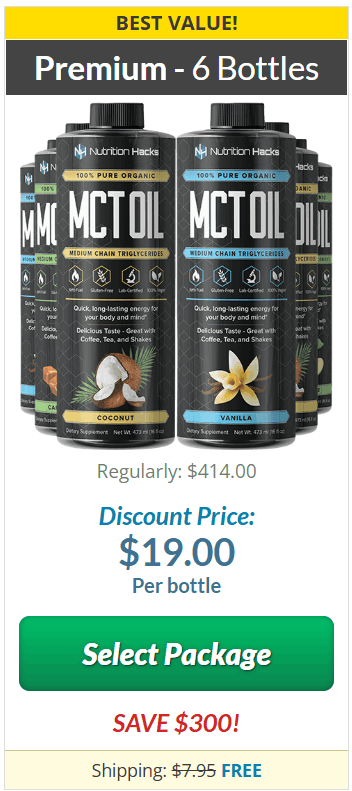
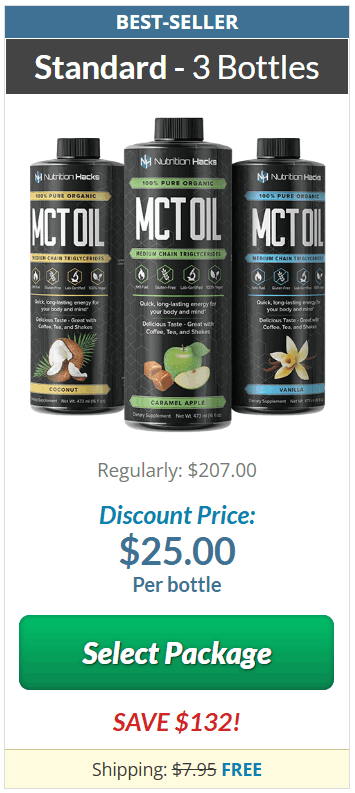
Flat Sale ONLY For Today - Special Offer
Save 75% OFF + Free Shipping Today!
MCT Oil is a purified form of medium-chain triglycerides extracted primarily from coconut oil and palm kernel oil. Unlike long-chain triglycerides (LCTs), MCTs bypass the typical digestive process and are absorbed directly into the bloodstream, making them an immediate energy source.
MCTs differ from other fats in that they do not require bile acids for digestion. Their direct absorption into the bloodstream allows them to be used almost immediately for energy, reducing fat storage and increasing metabolic activity.
based on 72,651 reviews!
"I use MCT Oil during my fasts and it keeps hunger at bay without breaking ketosis. I feel more focused and alert, and it mixes easily into my tea."
~Lyra B - Wyoming, USA
"It gave me a noticeable energy boost, especially before workouts. But when I took too much too soon, I got stomach cramps. Once I adjusted the dose, it worked great."
~Zaiden G - Illinois, USA
"I started adding a tablespoon of MCT Oil to my morning coffee, and the mental clarity is amazing! No crash, just clean energy for hours. Definitely a staple in my keto diet now."
~Daria J - Texas, USA
MCT is an acronym for Medium Chain Triglycerides, a form of saturated fatty acids found in most foods and has numerous health benefits. These kinds of fatty acids are vital and help support healthy brain functions and many other body system functions.
MCT Oil plays an important role in weight management since it has a positive effect on leptin receptors. The leptin receptors aid in reducing food cravings by making you feel fuller for longer.
The greatest source of MCT Oils is coconut oil. Approximately 44% -53% of the fatty acids in coconut oil are MCT Oils. However, MCT Oil supplements are beginning to gain popularity in today’s market.
MCT Oils are beneficial nutrients that are lacking in the diets of many people because most people believe that saturated fats may cause heart attack.
Typically, the primary sources of brain energy are carbohydrates or sugars, but when your glucose reserves drop, the liver starts converting stored fat into something called ketones.
Ketones are substances that the brain can use for fuel instead of glucose or sugar. They are produced by the liver when it breaks down a lot of fat to yield energy in the absence of carbs. Ketones are transferred directly to the brain passing through the blood-brain barrier.
This process replaces fats in place of glucose as fuel and provides the brain, heart, and muscles with energy. Evidence shows that MCT Oil helps increase its function and energy by 8 to 9% for brain function.
So, when you start consuming more MCTs and producing more ketones, as in a ketogenic diet with lower carbohydrate content, there is an increase in your blood level of ketones. This buildup has the ability to provide various health benefits.
MCTs are distinguished from other triacylglycerols by the number of their carbon chains, ranging from 6-12. (1) The length of these chains determines their effects. You may have noticed an MCT supplement with these labels indicating their carbon chain length:
• C6 (Caproic Acid): This is the shortest MCT molecule and constitutes less than 1% of coconut oil. You’ll rarely find it used in supplements, possibly due to its unpleasant taste and smell.
• C8 (Caprylic Acid): Compared to pure coconut oil, C8 is nearly four times more effective at raising your body’s ketone levels. (2) It’s considered one of the most ketogenic MCT Oil alongside C10.
• C10 (Capric Acid): Although C10 is a bit slower in ketone production compared to C8, it’s still highly effective in helping you reach ketosis. This is likely why manufacturers sometimes combine them in MCT supplements.
• C12 (Lauric Acid): This is the longest MCT that accounts for 44-51% of all fatty acids in coconut oil. C12 has antibacterial, antiviral, and antiprotozoal properties.(3) While ineffective at raising your ketone levels, it’s often added to soap and cosmetic products.
• Quick Energy Boost: One of the most significant benefits of MCT Oil is its ability to provide immediate energy. Unlike other fats, MCTs go directly to the liver, where they are quickly converted into ketones. This makes them an excellent fuel source for athletes, individuals following a ketogenic diet, and those needing a quick mental or physical energy boost.
• Supports Weight Loss and Fat Metabolism: MCT Oil has been shown to boost metabolism and increase fat burning. Studies suggest that MCTs may promote satiety, reducing overall calorie intake. They also enhance thermogenesis, helping the body burn more calories throughout the day.
• Enhances Cognitive Function: Ketones produced from MCT Oil serve as an alternative energy source for the brain. Research indicates that MCT Oil may help improve memory, focus, and mental clarity, making it a valuable supplement for individuals with neurodegenerative conditions such as Alzheimer’s disease.
• Supports Gut and Digestive Health: MCTs possess antimicrobial properties that help balance gut bacteria. Caprylic acid (C8), in particular, is known for its ability to combat harmful bacteria and yeast, such as Candida, promoting better digestive health.
• May Improve Athletic Performance: MCT oil is a preferred energy source for endurance athletes. By reducing reliance on glycogen stores, MCTs can help sustain energy levels and improve workout performance without causing blood sugar spikes.
• Potential Impact on Cholesterol Levels: There is some debate over how MCT Oil affects cholesterol. While some studies suggest that MCTs may increase HDL (good cholesterol) levels, others indicate that they might also raise LDL (bad cholesterol) in certain individuals. If you have a history of heart disease or high cholesterol, it’s best to consult a healthcare provider before incorporating MCT Oil into your diet.
• Improved Nutrient Absorption: Because MCTs are easier to digest than long-chain triglycerides, they can aid in the absorption of fat-soluble vitamins such as A, D, E, and K. This makes MCT Oil particularly beneficial for individuals who have difficulty absorbing nutrients due to digestive disorders or medical conditions that affect fat metabolism.
• May Support Immune Function: MCT Oil has been found to have antimicrobial and antiviral properties that can help strengthen the immune system. Lauric acid (C12), while technically a long-chain triglyceride, is present in some MCT oils and is known for its ability to combat harmful pathogens. Additionally, MCTs contribute to gut health, which is closely linked to immune function. By maintaining a balanced gut microbiome, MCT Oil may help the body defend itself against infections and illnesses.
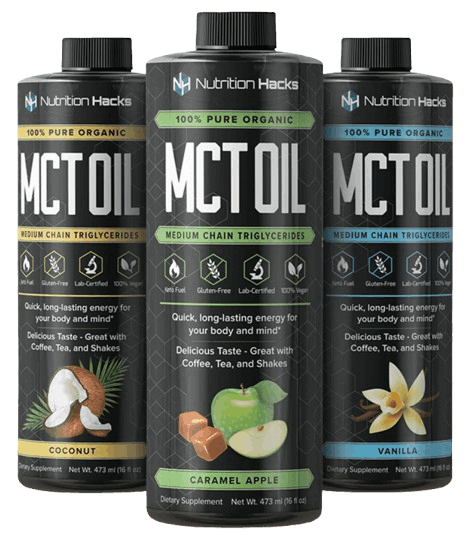
• Digestive Issues: For some individuals, consuming MCT Oil may lead to digestive discomfort, including nausea, diarrhea, and cramping. It is recommended to start with small doses and gradually increase intake to assess tolerance.
• Potential Weight Gain if Overconsumed: While MCTs can support weight loss, excessive intake may lead to unwanted weight gain due to their high calorie content. Moderation is key to maintaining a balanced diet.
• Not Suitable for All Diets: Individuals with liver conditions or certain metabolic disorders should consult a healthcare professional before incorporating MCT Oil into their diet, as it may not be suitable for everyone.
MCT Oil is a specific type of saturated fat obtained from palm kernel or coconut oil. MCT stands for medium-chain triglycerides, and they are easily digestible compared to long-chain triglycerides (found in avocados, nuts, and olive oil). The body can convert these medium-chain triglycerides into ketones, which are only helpful when you are on a ketogenic diet.
Unlike most supplements, not all MCT Oils are similar. Do you want the best of the best? Brain Octane C8 MCT Oil, derived from coconuts, can help you fight food cravings, promote mental focus and alertness, heart health and give you the energy to burn excess fat. Individuals who are not on a ketogenic diet can also reap the benefits of MCT Oil.
Coconut oil and medium-chain triglycerides (MCT) oils are saturated fats that have gained popularity on the market for several years. The characteristics of the oils are almost similar, but they are made up of different compounds making them unique.
Coconut oil contains relatively small amounts of MCTs. MCT Oil C8 (caprylic acid) contains about 6% of coconut oil, while C10 (capric acid) contains about 9% of coconut oil. These two forms of MCTs are most popular because they are easily converted to caloric acid compared to other saturated fats in coconut oil. Well, coconut oil is a great choice, but if you want to reap more benefits, you should use MCT Oil
MCTs derived from virgin coconut oil contains about 30% lauric acid, which acts as a slow-burning fuel source in the body. Lauric acid stimulates the production of monolaurin, a compound that supports a healthy immune system and promotes optimal gut functions.
MCT Oils contain a concentrated source of MCTs derived from palm oil or coconut oil. MCT Oil is 100% MCTs while coconut oil contains combinations of other saturated fats.
The bottom line on MCT Oil is that if you are looking for the right way to lose weight, boost endurance, increase mental performance, and even lower the risk of heart disease, then MCTs deserve a closer look.
MCT Oil contains fatty acids that can potentially trigger weight loss by lowering body fat, improve satiety, and improve the gut environment.
In addition, it is equally helpful for the effect of mental enhancement and athletic performance. This makes it a multipurpose oil that factors in when healthy fats are missing from the diet.
Of course, there is the off chance that MCTs may cause some digestive or laxative distress, but when weighing in the benefits over its limitations, the former outweigh the latter easily.
• Start small: Begin with 1 tsp/day, increase gradually to 1–2 tbsp.
• Add to drinks: Mix into coffee, smoothies, or tea.
• Use in meals: Drizzle over salads, soups, or yogurt.
• Energy boost: Take before workouts for quick fuel.
• Don’t cook with it: Not for high-heat cooking.
The MCT Oil are backed by a 100% money back guarantee for 30 full days from your original purchase.
If you’re not totally and completely satisfied with the MCT Oil, or your experience in the first 30 days from your purchase we’ll give you a refund within 48 hours of the product being returned.
That’s right, simply return the MCT Oil, anytime within 30 days of your purchase and you’ll receive a refund, no questions asked!
Yes, you can eat after taking MCT Oil. Most research studies on MCT Oil and weight loss recommend that MCT Oil should be taken as part of a meal. However, other studies claim that taking MCT Oil before a meal increases ketone levels compared to taking it with a meal. Basically, you can take MCT Oil by itself or accompanied by a small snack at least one hour before having your meal. This will help rise ketone levels in the body that help suppress your appetite and make you eat less.
The amount of time that MCT Oil rises blood ketones is vital if you consider the frequency of dosage. After taking MCT Oil, the ketones rise for about four hours. Taking your MCT Oil together with your breakfast helps reduce the amount of food you will eat throughout the day. If you never take breakfast, then you can take MCT Oil before your main meal of the day.
Yes, MCT Oil supports a healthy heart by reducing the risk factors for heart disease. Some of the risk factors for heart disease include; body mass index, high cholesterol, inflammation, blood pressure, and smoking. MCT Oil promotes weight loss which may help reduce the risk for heart diseases.
A research study was conducted on overweight men who were given MCT Oil for 29 days. The results showed that their cholesterol levels reduced by 12.5%. MCT Oil stimulates the production of heart protective cholesterol which in turn reduces the risk of heart diseases.
Most people prefer mixing MCT Oil into their preferred beverages or foods. You may take MCT on its own but you should beware of its side effects. Consuming the oil on an empty stomach may cause stomach upset, diarrhea, bloating, vomiting, and cramping.
One bottle of MCT Oil can last you a long time and it may go bad since you only use small amounts of it. Refrigerating your MCT Oil is the best way to store it since it prevents the effects of sunlight and heat. Before you refrigerate it, ensure it is in an airtight container.
Most studies claim that MCT Oil is safe for pregnant women. However, it is advisable for pregnant women to consult their healthcare providers before start to use MCT Oil or supplements.
The market is full of MCT Oils from different manufacturers. However, most brands claim that their MCT Oil is vegan-friendly. You can do your research on the specific brand to find out if their oil is vegan before you purchase it.